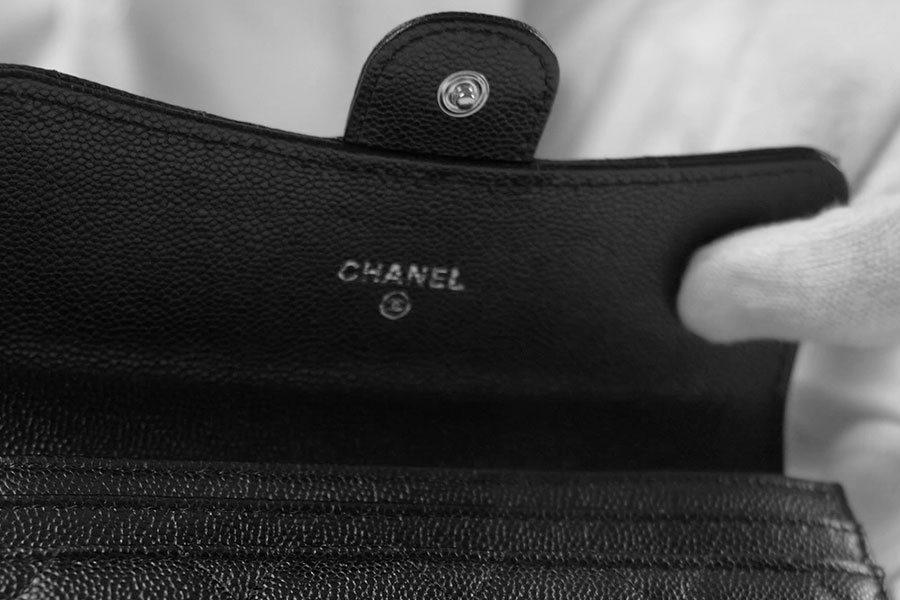
Thirteen letters. They will never appear on a Chanel microchip.
Think they were chosen at random? They weren’t.
Chanel officially introduced microchips in its bags in April 2021, with the launch of the 21A collection. Since then, the hologram stickers and paper authenticity cards — used for decades — have been replaced by embedded chips, housed on a small metal plate inside the bag, carrying digital information about the model and designed to fight counterfeiting.
But behind that small metal rectangle lies a logic far more complex than it seems at first glance.
The First Lawthenticator Rule
A chip is not “just a more modern serial number”.
It is a system with precise technical rules, and you need to know them for the chip to be truly useful in authentication. Seeing that “there’s a chip” is not enough.
1. Why Chanel Switched to RFID
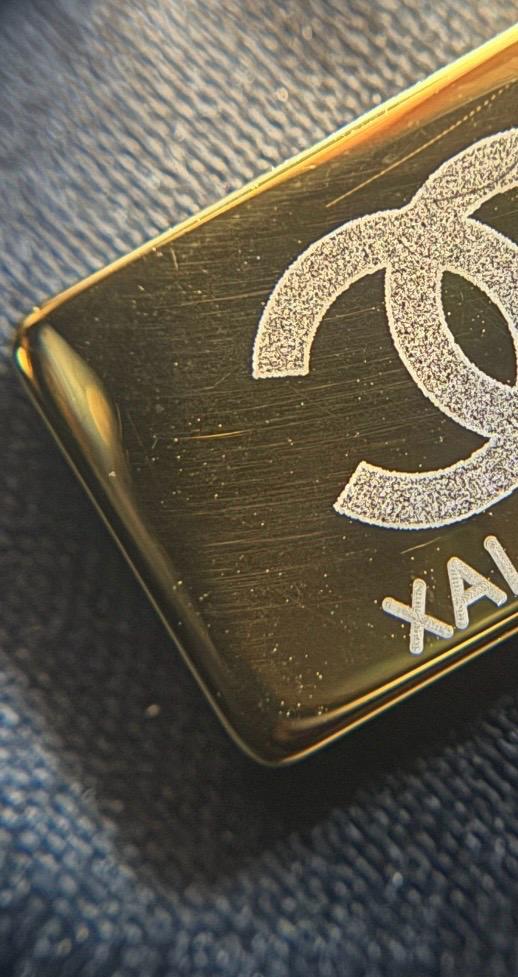
RFID technology in luxury leather goods factories offers advantages well beyond aesthetics: greater security and traceability, more efficient inventory control, faster customer service, valuable data analytics for the company, and direct integration with internal digital systems.
In practice, RFID chips give Chanel secure product authentication, efficient tracking along the entire supply chain, and a clear shift from traditional printed serial numbers to physical embossing.
2. How the Engraving Works
Chanel uses laser engraving, not traditional contact engraving.
It is a fast, precise process that creates permanent markings by melting the surface of the material. Engraved markings have high contrast and appear white or black depending on how they reflect the laser beam — the same technique commonly used for data matrix codes, serial numbers, barcodes and logos on metals, but applied here to specific standards for the Chanel plate.
3. The Grooves (Almost) No One Notices
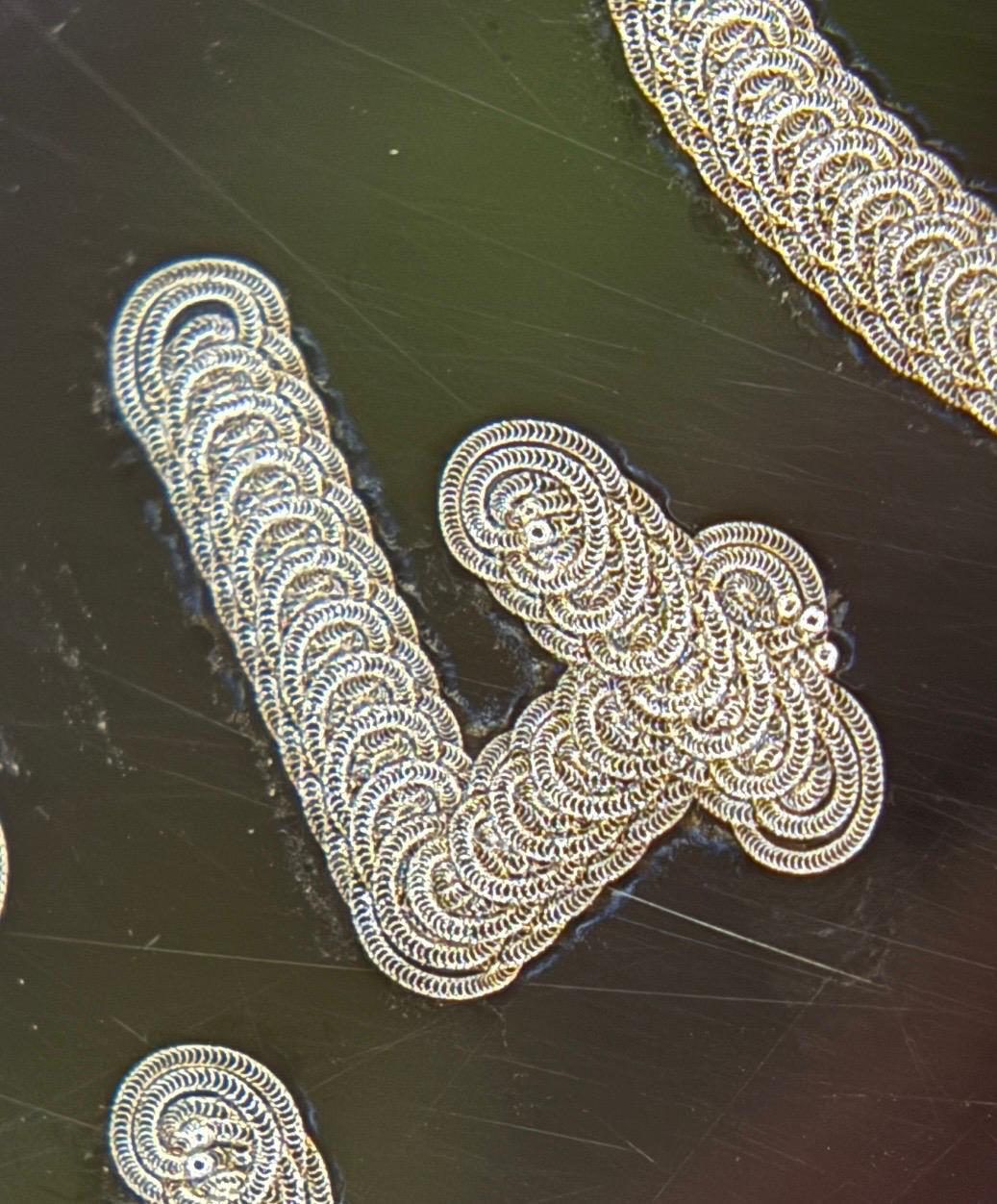
Laser engraving creates microscopic overlapping grooves — or spirals — on the surface of the chip. The spacing between each circle is determined by the laser pulses, and this spacing, together with the resulting color, becomes an authenticity factor in itself.
There’s more: the diffractive nature of these grooves causes light to diffract when it hits them and form interference patterns — producing a true holographic effect, visible only when the chip is viewed at the right angle and in the right light.
It is a detail that no smartphone photo, however sharp, can truly capture.
4. Character Composition: The Key Point
The Chanel chip can be programmed to include only letters, a combination of letters and numbers (alphanumeric), or be made up exclusively of letters, with no numbers.
One rule, however, is fixed: it must always contain at least one letter. Purely numeric chips are not yet in circulation.
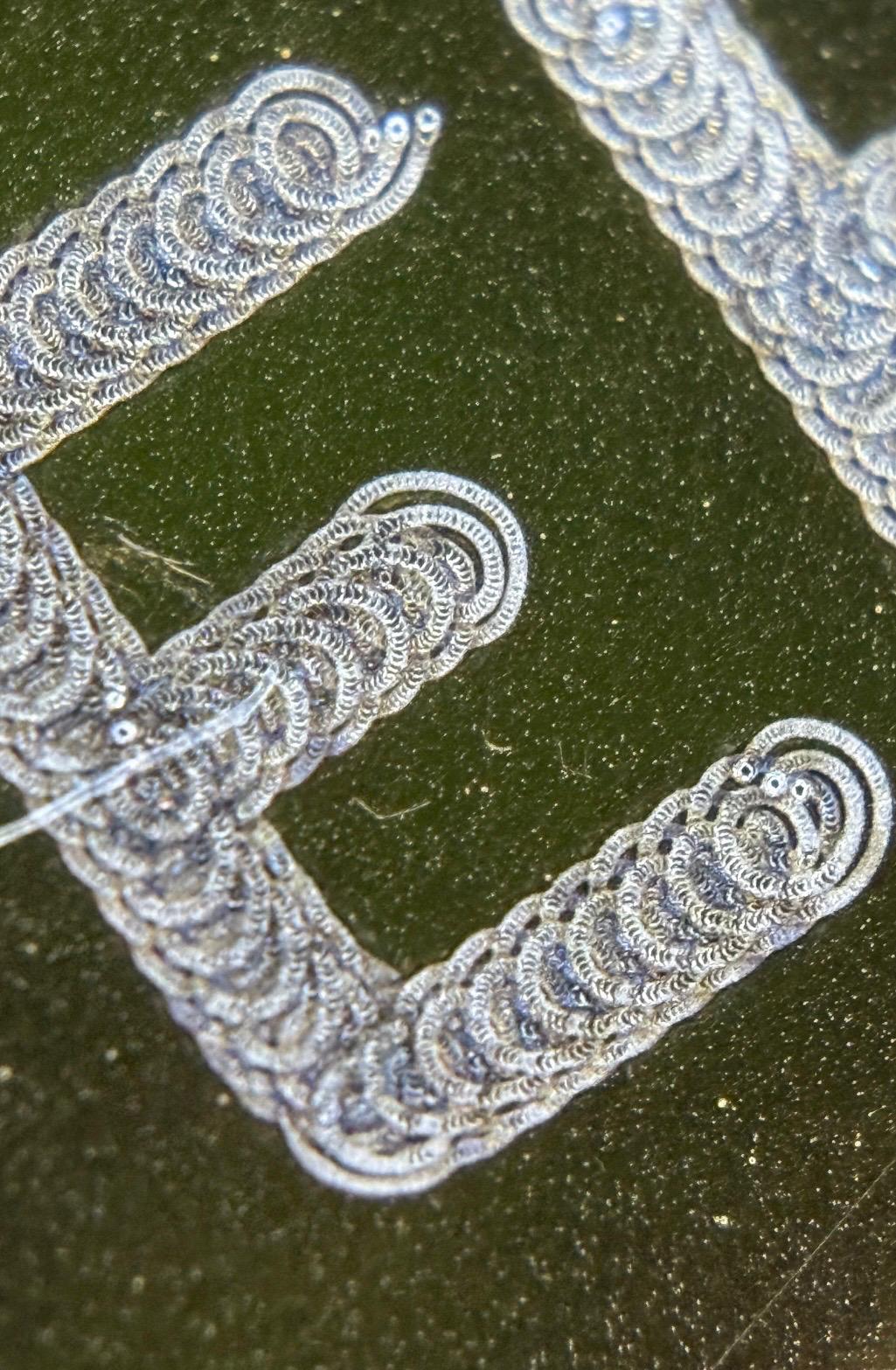
The Excluded Letters
The following letters never appear in a Chanel chip code:
B, D, F, I, M, O, Q, R, S, V, W, Y, Z
This is not a random choice. There are three specific technical reasons:
Visual similarity — to avoid confusion between letters and numbers. A “B”, for example, could be mistaken for an “8”; a “D” for a “0”; a “Z” for a “2”.
Use of space — wider letters such as “W” and “M” take up more space on the plate. The “W” in particular is, in its construction, literally a “double U”.
Engraving complexity — letters with more complex shapes, such as “Y”, “Q” and “R”, are a challenge for clarity and legibility when engraved with this laser technique.
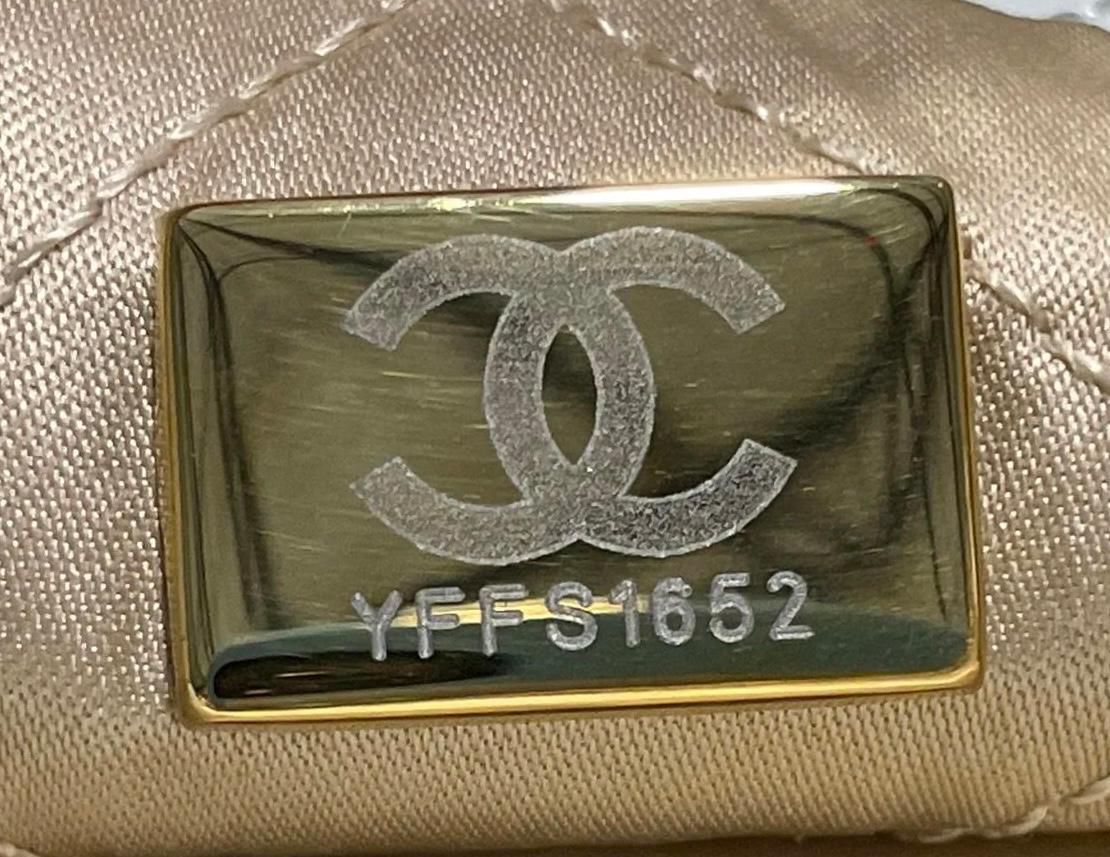
5. The Plate as a Whole
The authenticity of the plate does not depend on a single element but on the convergence of several factors: its precise measurements — width, length, depth at different points —, the exact color tone (gold or silver, consistent with the bag’s hardware), the light reflections and holographic effects it shows, and the specific position of the chip within that particular model.
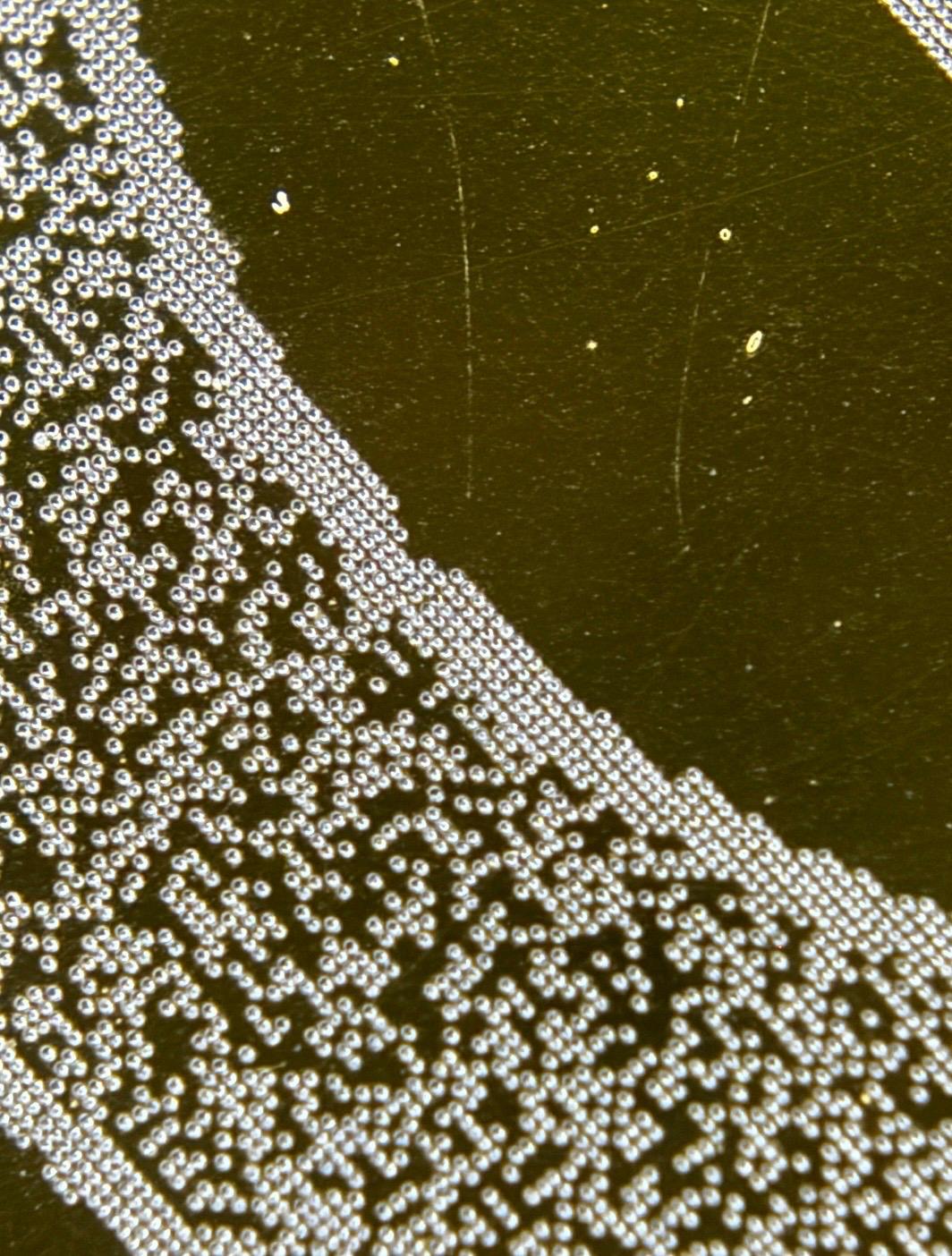
A Detail Beyond Aesthetics
The interlocking CC logo engraved on every plate is not merely decorative. It serves a deeper purpose in the verification process — a level of analysis that, for professional reasons, I do not share publicly in detail.
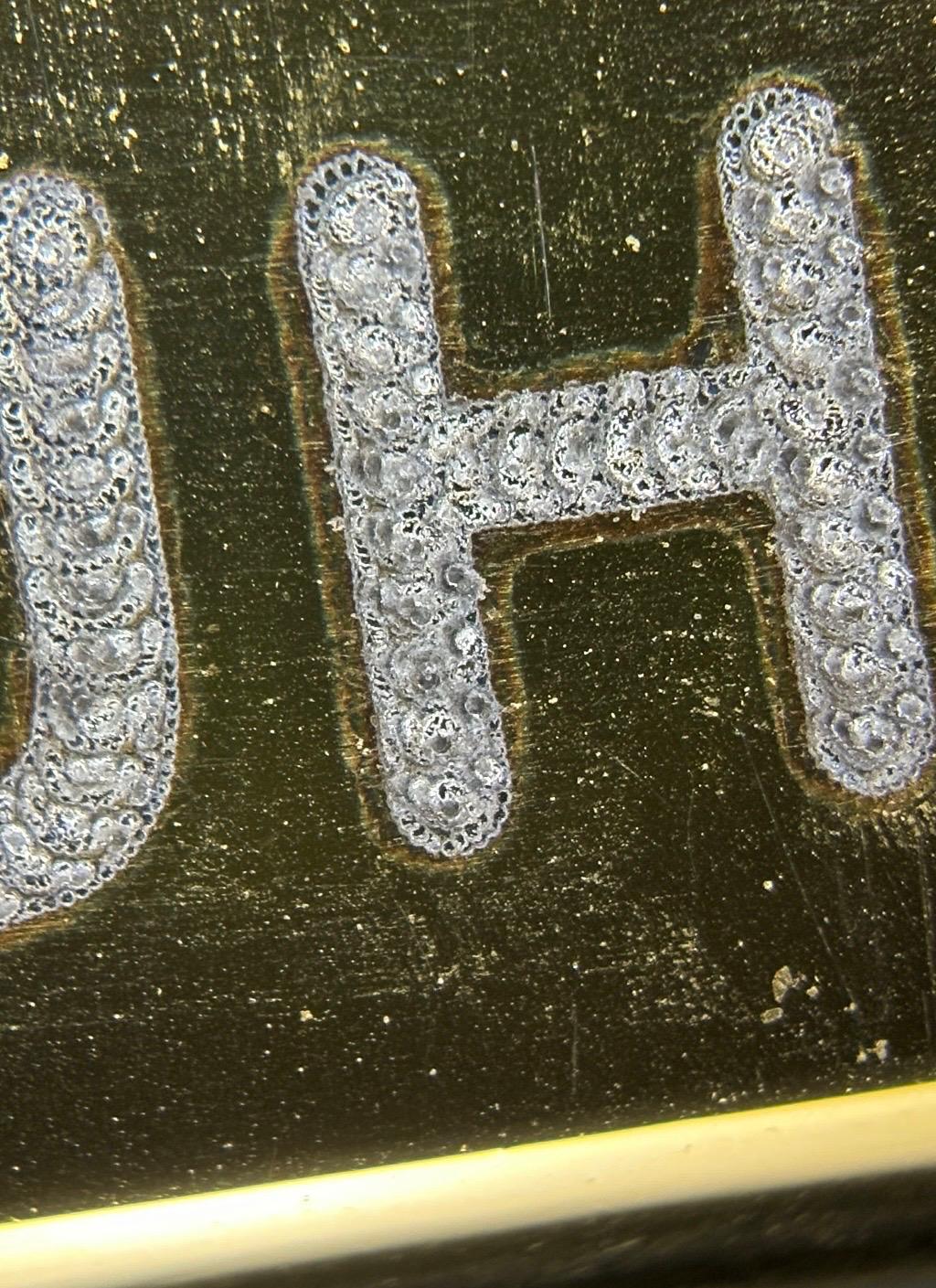
An Evolving System
It is worth remembering that the system described in this article reflects the current state of the technology adopted by Chanel. As has happened before — from the switch from 7-digit to 8-digit serial numbers to the introduction of the microchip itself in 2021 — the brand may in future modify, update or replace the technical features described here, including the rules on character composition or the excluded letters.
For this reason, professional authenticators must stay constantly up to date on these aspects, without assuming that a technical fact valid today will remain so indefinitely.
The Lawthenticator Checklist
When you are looking at a Chanel with a microchip, ask yourself:
- Does the code contain at least one letter, as the current system requires?
- Are none of the letters in the code among the excluded ones (B, D, F, I, M, O, Q, R, S, V, W, Y, Z)?
- Do the laser engraving grooves show the expected holographic effect when viewed in the correct light?
- Are the plate’s measurements — width, length, depth — consistent with known standards?
- Do the color and tone of the plate match the bag’s hardware?
- Is the chip’s position consistent with what is expected for that specific model?
If even one answer raises a doubt, it does not automatically mean the bag is fake. It means that element deserves a closer look.
Why a Checklist Doesn’t Replace an Expert Appraisal
This guide helps you know where to look. It does not — and could not — turn a photograph into a certificate of authenticity.
In professional practice, the examination requires direct observation of the plate under several lighting conditions, measurement with appropriate tools, and comparison with documented features.
The detail tells the story. This is the principle behind the Lawthenticator method.
Have a Doubt About a Chanel with a Microchip? If you need to buy, sell, or verify a luxury item and require a professional assessment, you can request a Lawthenticator appraisal through the website.
Lawthenticator — Authenticity is in the details.
